Article张裕
Changyu winery: the story of China’s oldest wine company, from 1892 to Best in Show
Published · Updated
This is the short history, told only from sources that can be checked. Where two pages give a different year, a different spelling or a different blend, both are kept.
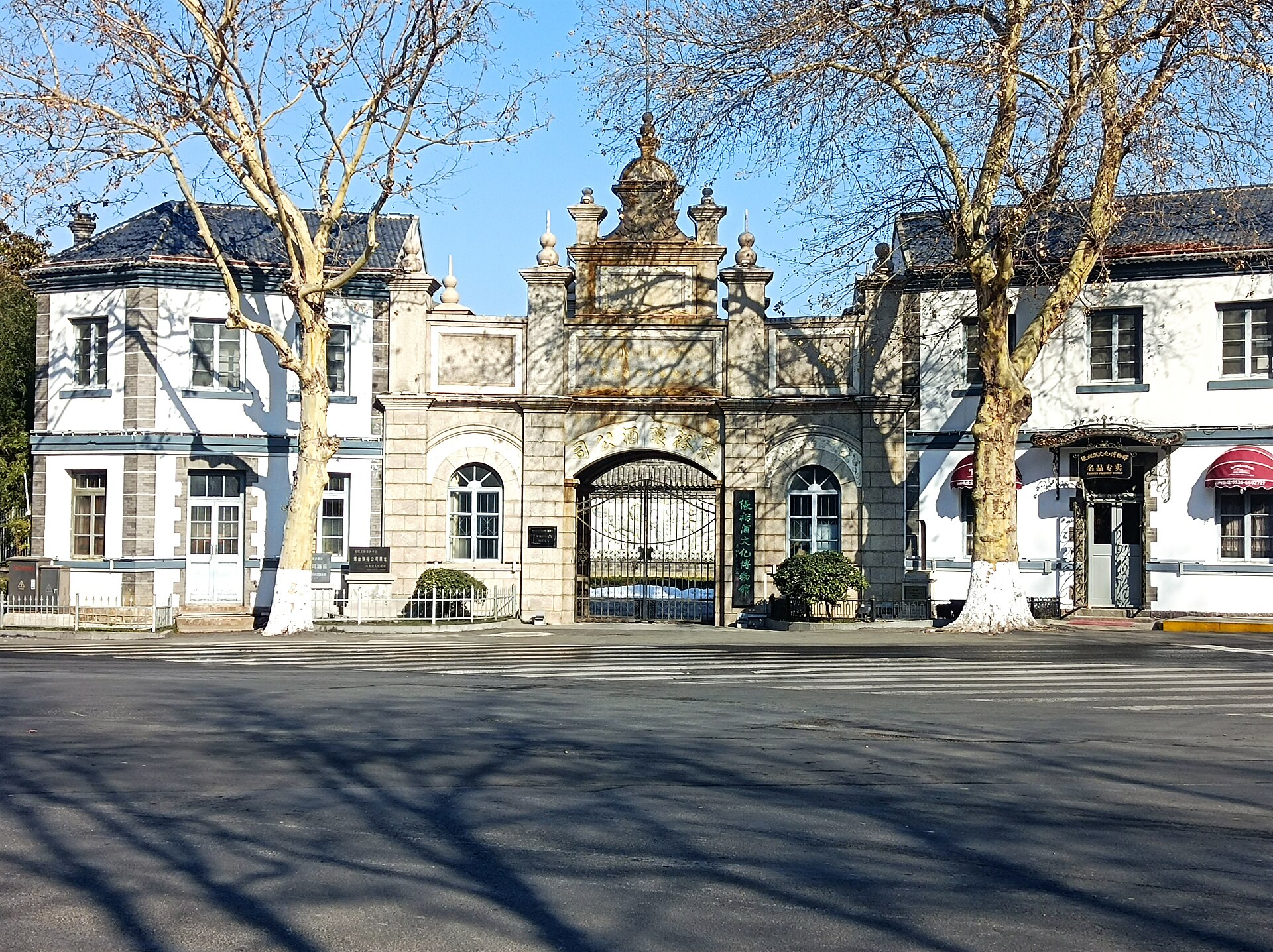

Changyu (张裕, Zhāngyù) is where modern Chinese wine starts. The company dates itself to 1892 in Yantai, on the coast of Shandong, and in 2025 one of its everyday reds was among China’s first two Best in Show wines at the Decanter World Wine Awards. For the wider picture of regions, grapes and critics, start with our guide to Chinese wine.
- Changyu winery: quick facts
- Who founded Changyu? Zhang Bishi and 1892
- Three tries at vines, three tries at a winemaker
- 1915: four Grand Prizes in San Francisco
- Noble Dragon wine and Cabernet Gernischt
- Wine at the state table
- The château era, from 2002
- 2025: Best in Show for a ¥188 red
- Visiting Changyu
- Frequently asked questions
Changyu winery: quick facts
- Founded: 1892, in Yantai, Shandong, by Zhang Bishi (张弼士), also written Cheong Fatt Tze. (Changyu)
- First wine and brandy: Changyu says it made China’s first bottle of wine in 1899 and its first brandy in 1914. (Changyu)
- First international prizes: four Grand Prizes at the 1915 Panama-Pacific International Exposition in San Francisco. (Changyu Wine Culture Museum)
- Flagship everyday red: Noble Dragon (解百纳, Jiěbǎinà), built on Cabernet Gernischt.
- Latest headline: Noble Dragon N188 2022, Best in Show and 97 points, Decanter World Wine Awards 2025. (Decanter results)
- Visit: the Changyu Wine Culture Museum homepage publishes hours of 8:00 to 17:00, closed at 16:30, all year. (Changyu Wine Culture Museum) See our Changyu directory page.
Who founded Changyu? Zhang Bishi and 1892
Changyu’s own history page says Zhang Bishi, an overseas Chinese businessman, set up the company in Yantai in 1892 “with the aspiration of revitalizing the nation through industry”, and calls it the start of industrial winemaking in China. (Changyu, Centenary History)
A Changyu feature published by Decanter China (a paid promotion, so read it as the company’s account) adds the background: Zhang had left for Southeast Asia at 17 and made his fortune there, first tasted grape wine in 1871 at the French consulate in Batavia, now Jakarta, and chose Yantai because wild grapes grew along that coast. The same piece gives the meaning of the name as “wealth and thriving success”. (Decanter China)
Three tries at vines, three tries at a winemaker
The early years were hard. Changyu says it imported 124 varieties, 690,000 vines in all, from Europe, and that most of them died. A second batch from a different source failed too. In the third year the company grafted European vines onto local wild vines, and those took. Changyu also says that more than 90% of the grape varieties grown in China today were introduced and named by the company. (Changyu)
Finding a winemaker took three attempts as well. By Changyu’s account, the first hire, from Britain, died on the voyage; the second, from the Netherlands, was let go after two years. The third was the Austro-Hungarian vice-consul in Yantai, from a winemaking family, who offered himself for the job. Changyu’s English page spells him “Baron M. Von Balboa”; the Decanter China feature and Changyu’s KOYA brandy site write “von Babo”. (Changyu, Decanter China, KOYA)
Between 1894 and 1905 the company dug what it calls Asia’s first underground wine cellar, an 11-year job. (Changyu) The wein.plus lexicon describes the “Great Cellar” as more than 3,000 m², seven metres deep, one metre below sea level and 800 metres from the sea. (wein.plus)
1915: four Grand Prizes in San Francisco
In 1915 Zhang, then leading a Chinese industrial delegation to the United States, took Changyu’s wines to the Panama-Pacific International Exposition in San Francisco. Changyu says its red rose wine, Riesling, Koya brandy and a Traminer vermouth won the Grand Prize, the top award, and calls it the first international honour for Chinese wine and brandy. (Changyu) The company museum says it holds the one surviving medal of the four recorded in its archives. (Changyu Wine Culture Museum)
Noble Dragon wine and Cabernet Gernischt
Changyu’s best-known wine is Noble Dragon, Jiěbǎinà in Chinese. The Decanter China feature dates the first release to 1931, named by managing director Xu Wangzhi, while a 2013 Decanter China news report quotes Changyu as saying the brand was registered in 1937. (Decanter China feature, Decanter China news)
The grape behind it is Cabernet Gernischt. Jancis Robinson explains the name is probably a mistranscription of “Cabernet gemischt”, German for “mixed Cabernets”, and reports that DNA work by José Vouillamoz on samples from Changyu showed it is Carmenère. Her grape entry adds that some Chinese plantings under that name may be Cabernet Franc. (Jancis Robinson, 2012, Jancis Robinson, grape entry) Changyu has pushed the grape as a Chinese signature and named 25 May “World Cabernet Gernischt Day”. (Decanter China)
Wine at the state table
The Decanter China feature says Changyu wines were served at the October 1949 banquet for the founding of the People’s Republic, and that Premier Zhou Enlai gave Changyu brandy to foreign leaders at the 1954 Geneva Conference. It also names Chen Puxian, chief winemaker from 1953 for 40 years and one of China’s first women winemakers. (Decanter China) That banquet link runs through Changyu’s Beijing estate today: Decanter’s Sylvia Wu writes that Château Changyu AFIP wines are said to have been served on 55 occasions to dignitaries. (Decanter) If you are pouring wine for Chinese hosts, our wine pairing with Chinese food guide covers the table.
The château era, from 2002
Changyu says Château Changyu-Castel, opened in Yantai in 2002 with France’s Castel group, was China’s first specialist château. (Changyu, China Daily, 2012) Others followed. The list below follows the wein.plus lexicon and China Daily:
- Château Changyu-Castel, Yantai, Shandong, 2002, with Castel.
- Château Changyu AFIP, Miyun, Beijing, completed 2007.
- Golden Icewine Valley, Liaoning, an icewine venture with Canada’s Aurora.
- Château Changyu Moser XV, near Yinchuan, Ningxia, opened 2013 with Austria’s Lenz Moser. See our Moser XV page.
- Château Changyu Baron Balboa, Shihezi, Xinjiang.
- Château Changyu Rena, Shaanxi.
- Château Changyu Tinlot, Yantai, named after Robert Tinlot, former head of the OIV.
(wein.plus, China Daily, 2013)
Abroad, Changyu’s own site lists Kilikanoon in Australia, Marqués del Atrio in Spain and Mirefleurs in Bordeaux, among others. (Changyu, Global layout)
2025: Best in Show for a ¥188 red
At the 2025 Decanter World Wine Awards, Changyu Noble Dragon N188 2022 from Yantai was named Best in Show with 97 points, one of China’s first two Best in Show wines alongside Dongfang Yuxing’s Geruihong Yeguangbei 2022 from Ningxia. (Decanter results, Decanter China) The judges’ note calls it “dark and searching, with plum-blackberry fruits”. The results page lists the grape composition as 75% Cabernet Gernischt, 20% Cabernet Sauvignon and 5% Syrah. The tasting note on that same page calls it a blend of 75% Cabernet Gernischt and 25% Cabernet Sauvignon. Decanter China describes a blend of Cabernet Gernischt (75%) and Cabernet Sauvignon, and says the name nods to its retail price of ¥188, or £20. The same report notes that a year earlier Château Changyu Tinlot 2016 had the top Chinese score at DWWA 2024, 96 points. (Decanter results, Decanter China) Our article on Jia Bei Lan and the 2011 Decanter trophy tells the story of China’s earlier breakthrough.
Visiting Changyu
In Yantai, the museum’s about page says the Changyu Wine Culture Museum officially opened in 1992. (About) The museum guide places it at 56 Dama Road, Zhifu District; the contact page spells the street “Damu”. (Guide, Contact) The museum homepage publishes opening hours of 8:00 to 17:00, and says it is closed at 16:30, all year round. (Changyu Wine Culture Museum) In Ningxia, a Ningxia culture-and-tourism page calls Château Changyu Moser XV a national 4A-level scenic spot. (China Daily) Near Beijing, Decanter says AFIP is open for conferences, dining and stays all year. Check current hours and tickets before travelling; details are on our Changyu and Moser XV pages, and the Shandong and Ningxia guides.
Frequently asked questions
What is China's oldest wine company?
Changyu, founded in Yantai in 1892 by Zhang Bishi, is the company Decanter China calls “China’s largest and oldest modern wine company”.
Who founded Changyu?
Changyu’s own history page says Zhang Bishi, an overseas Chinese businessman, set up the company in Yantai in 1892 “with the aspiration of revitalizing the nation through industry”, and calls it the start of industrial winemaking in China.
What does Changyu mean?
Changyu’s feature in Decanter China gives “wealth and thriving success”.
What is Changyu Noble Dragon?
Noble Dragon (解百纳, Jiěbǎinà) is Changyu’s long-running red, based on Cabernet Gernischt (Carmenère). The N188 2022 won Best in Show at the Decanter World Wine Awards 2025.
What grape is Cabernet Gernischt?
Jancis Robinson explains the name is probably a mistranscription of “Cabernet gemischt”, German for “mixed Cabernets”, and reports that DNA work by José Vouillamoz on samples from Changyu showed it is Carmenère. Her grape entry adds that some Chinese plantings under that name may be Cabernet Franc.
Can you visit Changyu?
Yes. The Changyu Wine Culture Museum in Yantai publishes daily hours, and several Changyu châteaux receive visitors. Check before you go.
In this directory
- Guide to Chinese wine Regions, grapes, critics and the 2025 awards.
- Changyu The Yantai museum, with published hours.
- Château Changyu Moser XV The Ningxia château, opened in 2013.
- Shandong Yantai, where the company was founded.
- Ningxia Moser XV, and the other 2025 Best in Show.
- Wine pairing with Chinese food Pouring wine for Chinese hosts.
- Helan Qingxue and Jia Bei Lan The 2011 Decanter trophy.
Sources
- Changyu, Centenary History and Chinese page
- Changyu, Global layout
- Changyu Wine Culture Museum, 1915 Panama medal
- Changyu Wine Culture Museum
- Changyu Wine Culture Museum, About
- Changyu Wine Culture Museum, Guide
- Changyu Wine Culture Museum, Contact
- KOYA (Changyu brandy), History
- Decanter China, Changyu: China’s century-old wine legend (promotion) A paid promotion. Read it as the company’s account.
- Decanter China, Searching for China’s signature wine grape
- Decanter China, DWWA 2025 Best in Show
- Decanter World Wine Awards 2025 results, Noble Dragon N188 2022
- Decanter, Château AFIP producer profile (Sylvia Wu)
- Jancis Robinson, Changyu Cabernet Gernischt Blend 2011 (2012)
- Jancis Robinson, Cabernet Gernischt
- wein.plus lexicon, Yantai Changyu
- China Daily, 2012
- Ningxia culture and tourism, Château Changyu Moser XV
- China Daily, 2013